
Table of contents
- Introduction
- 1. What Has Changed in Nigeria’s New Education Curriculum?
- 2. Why This Matters for Private Secondary Schools in Jos
- 3. Academic Excellence and Vocational Competence: Finding the Right Balance
- 4. How Private Schools Can Implement the New Trade Curriculum: A Step-by-Step Guide
- Step 1: Conduct a Curriculum and Resource Audit
- Step 2: Assess Available Teacher Capacity
- Step 3: Develop Appropriate Practical Learning Spaces
- Step 4: Integrate Practical Learning with Academic Subjects
- Step 5: Establish Industry and Community Partnerships
- Step 6: Measure Competence, Not Just Participation
- 5. Beyond Compliance: The Bigger Opportunity for Values-Driven Education
- 6. What Should Parents Look for in Schools?
- Conclusion: Preparing Students for More Than the Next Examination
- Frequently Asked Questions (FAQs)
Introduction
For years, academic performance has been one of the most visible measures of success in Nigerian schools. Parents want their children to achieve excellent examination results, secure admission into reputable universities and build promising careers.
These aspirations remain important. However, the changing demands of the modern economy raise another question: Beyond what students know, what can they actually do with what they have learned?
This question sits at the heart of Nigeria’s revised national education curriculum, which introduces a stronger emphasis on practical learning, digital competence and vocational skills.
Announced by the Federal Government in September 2025, the curriculum reform is designed to reduce subject overload, strengthen learning outcomes and equip students with knowledge and practical competencies relevant to contemporary society.
For private secondary schools in Jos, Plateau State, this development presents both an educational responsibility and an opportunity to rethink what meaningful secondary education should accomplish.
It is no longer enough to prepare students only for examinations. Schools must also prepare them to solve problems, create value and participate productively in society.
1. What Has Changed in Nigeria’s New Education Curriculum?
The Federal Ministry of Education introduced the revised curriculum for implementation from the 2025/2026 academic session.
One of its major objectives is to make education more functional by reducing the number of subjects students study while creating greater room for practical and relevant learning.
At the junior secondary level (JSS 1–3), students are expected to study between 12 and 14 subjects, including a trade subject selected from six approved options.
The Six Approved Trade Subjects
- Solar Photovoltaic Installation and Maintenance: Understanding solar energy systems, installation principles, maintenance and basic electrical safety.
- Fashion Design and Garment Making: Developing skills in clothing design, measurement, cutting, sewing and garment production.
- Livestock Farming: Learning animal husbandry, livestock management, feeding, health and basic production practices.
- Beauty and Cosmetology: Understanding personal care, beauty services, cosmetology techniques and professional practice.
- Computer Hardware and GSM Repairs: Developing practical knowledge of computer components, hardware maintenance, troubleshooting and mobile device repairs.
- Horticulture and Crop Production: Learning plant cultivation, nursery management, crop care and sustainable production methods.
At the senior secondary level, students are expected to study five compulsory subjects:
- English Language
- General Mathematics
- One Trade Subject
- Citizenship and Heritage Studies
- Digital Technologies
They will also select additional subjects across the Sciences, Humanities and Business fields.
What does this mean?
Vocational education is no longer something schools should regard as an optional extracurricular activity. Practical competence is becoming an integral part of the national curriculum.
Importantly, digital technologies and vocational trades are complementary but distinct components of the revised curriculum. Software development, for example, may be introduced through appropriate digital learning programmes, but it is not one of the six approved trade options listed above.
2. Why This Matters for Private Secondary Schools in Jos
Jos has a diverse educational and economic environment. Its growing and established businesses, professional services, agricultural activities, technology interests and creative enterprises provide opportunities for students to connect classroom learning with practical realities.
The new curriculum creates an opportunity for schools to make these connections more intentional.
Consider a student studying mathematics who also learns basic garment measurement and production. Another student studying science may explore solar energy principles and understand how photovoltaic systems work.
These experiences help students recognise that academic knowledge is not isolated from everyday life.
For example, mathematics develops logical reasoning, numerical competence and problem-solving abilities that are useful in business, engineering and technical occupations. Science provides the conceptual foundation for understanding energy, materials, living organisms and technological processes.
Similarly, language education strengthens communication, comprehension and the ability to explain ideas, while digital education prepares students to engage responsibly and effectively with technology.
Practical subjects provide opportunities to apply these foundations. Students learn to follow instructions, use tools, solve technical problems, manage resources and evaluate the results of their work.
The relationship is complementary: academic education develops the intellectual foundation for understanding the world, while vocational education creates opportunities to apply that understanding to practical situations.
For private schools, the challenge is to integrate both without compromising academic standards, discipline and the educational values that distinguish their institutions.
3. Academic Excellence and Vocational Competence: Finding the Right Balance

One concern parents may have is whether introducing trade skills will reduce the time available for conventional academic subjects. This concern deserves attention, but it also presents an opportunity to reconsider the relationship between academic and vocational education. The two are not competing educational pathways. Properly integrated, they reinforce each other.
Academic education develops theoretical understanding, analytical thinking, literacy, numeracy and the ability to engage with complex ideas. It prepares students for further academic study and equips them with the intellectual tools needed to understand different disciplines.
Vocational education, on the other hand, develops practical competence, technical problem-solving, creativity and the ability to translate knowledge into useful outcomes. It introduces students to occupational possibilities, entrepreneurship and the practical demands of different industries.
Consider solar photovoltaic installation. A student cannot properly understand solar energy systems through practical demonstrations alone. The subject requires an understanding of scientific principles, mathematical calculations, electrical concepts and safety procedures.
Fashion design similarly involves more than creativity and sewing. It requires measurement, geometry, planning, resource management and an understanding of materials.
Computer hardware repairs involve logical reasoning, technical knowledge, troubleshooting and systematic problem-solving.
In each case, academic knowledge strengthens practical competence, while practical experiences make academic concepts more relevant and easier to appreciate.
The most effective educational approach does not separate these experiences. It creates opportunities for students to understand concepts, apply them and reflect on the results.
The objective is not to turn every secondary school student into a tradesperson but to ensure that every learner develops useful competencies alongside a strong academic foundation.
4. How Private Schools Can Implement the New Trade Curriculum: A Step-by-Step Guide
For school administrators, curriculum implementation requires more than good intentions. It demands deliberate planning and institutional capacity.
Here are six practical steps private secondary schools in Jos can consider.
Step 1: Conduct a Curriculum and Resource Audit
Begin by examining the school’s existing curriculum, teaching resources, infrastructure and staff capacity.
Identify the practical requirements of each approved trade option and determine which facilities, equipment and instructional materials are needed.
Schools should also review the relevant NERDC curriculum documents to understand the learning objectives and expected competencies.
Step 2: Assess Available Teacher Capacity
A practical curriculum requires teachers who can translate theoretical concepts into meaningful learning experiences.
Schools should identify teachers with relevant technical expertise and invest in professional development where necessary.
Where specialised expertise is unavailable, partnerships with qualified instructors and accredited training providers may provide additional support.
Step 3: Develop Appropriate Practical Learning Spaces
Not every trade requires a sophisticated workshop, but every trade requires an appropriate and safe learning environment.
For example:
- Solar installation requires suitable demonstration equipment and electrical safety provisions.
- Fashion design requires sewing machines, measuring tools and workstations.
- Computer hardware repairs require appropriate tools and functional computer components.
- Horticulture requires access to suitable planting spaces and basic agricultural equipment.
Schools should prioritise safety, supervision and age-appropriate practical activities.
Step 4: Integrate Practical Learning with Academic Subjects
The greatest educational value emerges when students understand the relationship between what they study and what they practise.
Mathematics can support measurement and costing. Science can explain energy, materials and biological processes. Business Studies can introduce pricing, customer relations and enterprise management.
Language learning can strengthen technical communication, documentation and presentation skills.
This interdisciplinary approach makes classroom learning more relevant without weakening academic instruction.
Step 5: Establish Industry and Community Partnerships
Schools do not have to develop every technical capability independently.
Partnerships with qualified technicians, local businesses, professional associations, technology organisations and relevant training institutions can expose students to practical knowledge beyond the classroom. Such relationships can create opportunities for supervised demonstrations, mentorship, career conversations and structured learning experiences.
Step 6: Measure Competence, Not Just Participation
A student attending a practical lesson does not automatically mean learning has taken place.
Schools should establish clear assessment criteria that measure understanding, practical execution, problem-solving, safety awareness and the ability to explain completed tasks.
Students should have opportunities to demonstrate what they have learned through supervised projects, practical exercises and documented portfolios.
The ultimate measure is not how many vocational activities a school organises, but how much meaningful competence students develop.
5. Beyond Compliance: The Bigger Opportunity for Values-Driven Education
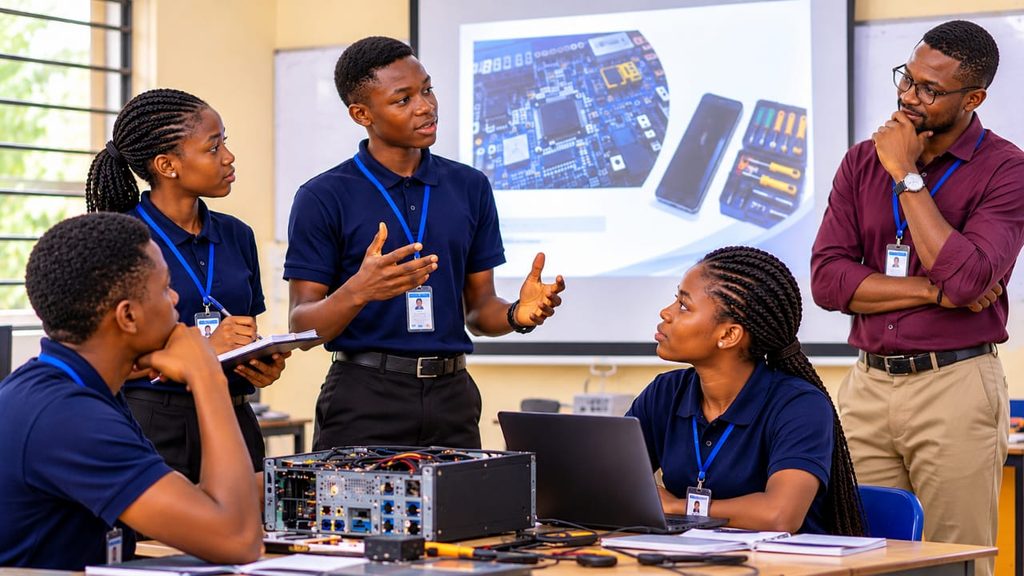
There is a difference between implementing a curriculum because government requires it and embracing it because it advances the purpose of education.
The revised curriculum creates an opportunity for schools to move beyond compliance towards a more intentional model of learning.
At Patris Schools, this conversation connects naturally with the philosophy of Building Nation Builders.
Education should develop more than examination proficiency. It should shape individuals who understand responsibility, recognise opportunities, respect the dignity of labour and possess the character to use their abilities productively.
This is where practical education must connect with character formation and leadership education.
A student learning computer hardware repairs should also understand honesty in professional service. A student exploring livestock farming should appreciate responsibility, patience and resource management. A student learning fashion design should develop discipline, creativity and respect for quality.
These are not separate educational outcomes. They are interconnected dimensions of personal development.
The broader vision is to raise Kingdom Citizens who combine knowledge, competence, integrity and a sense of responsibility towards their communities.
Educational opportunities, including initiatives such as the EPSS Scholarship, also form part of the wider conversation about access, development and preparing young people for meaningful contributions to society.
The philosophy of educational transformation associated with Dr. Dotun Reju and the wider emphasis on leadership and character formation reinforce an important principle: education should prepare individuals not merely to occupy positions but to contribute meaningfully wherever they find themselves.
6. What Should Parents Look for in Schools?
As the revised curriculum takes shape, parents should become more intentional about evaluating the educational experiences available to their children.
Beyond asking about examination results, consider asking:
- Does the school understand the revised national curriculum?
- Are practical trade subjects supported by qualified instructors?
- Are students given opportunities to apply classroom knowledge?
- Does the school have appropriate facilities and safety provisions?
- How are practical competencies assessed?
- Does the school balance academic achievement with character development and leadership?
These questions help parents distinguish between schools that simply advertise vocational education and those that have developed a structured approach to delivering it.
The quality of implementation matters just as much as the curriculum itself.
Conclusion: Preparing Students for More Than the Next Examination

Nigeria’s new basic education curriculum represents an important shift in how the country approaches learning, practical competence and student development.
For private secondary schools in Jos, the responsibility is to translate these national expectations into meaningful educational experiences.
This requires capable teachers, relevant infrastructure, effective curriculum planning and a willingness to connect academic knowledge with practical application.
The larger responsibility goes beyond producing students who can perform technical tasks though. Nigeria needs young people who can think critically, work responsibly, solve problems, create opportunities and lead with integrity.
That is the difference between education that merely transfers knowledge and education that develops people capable of transforming their environments.
At Patris Schools, Building Nation Builders means recognising that the future of education must develop the whole person: intellectually, practically, socially and morally.
The true measure of education is not simply what a student knows, but what that knowledge enables the student to become and contribute to society.
Join us in Building Nation Builders. Explore our website.
Frequently Asked Questions (FAQs)
The six approved trade options at the junior secondary level are Solar Photovoltaic Installation and Maintenance, Fashion Design and Garment Making, Livestock Farming, Beauty and Cosmetology, Computer Hardware and GSM Repairs, and Horticulture and Crop Production.
The revised curriculum incorporates trade education as a compulsory component of the junior and senior secondary subject offerings. Students study a trade subject as prescribed by the curriculum.
The revised junior secondary curriculum provides for students to select one trade subject from the six approved options.
Private schools must review their curriculum delivery, teacher capacity, practical learning facilities, instructional resources and assessment methods to align with the revised national requirements.