

Estimated reading time: 28 minutes
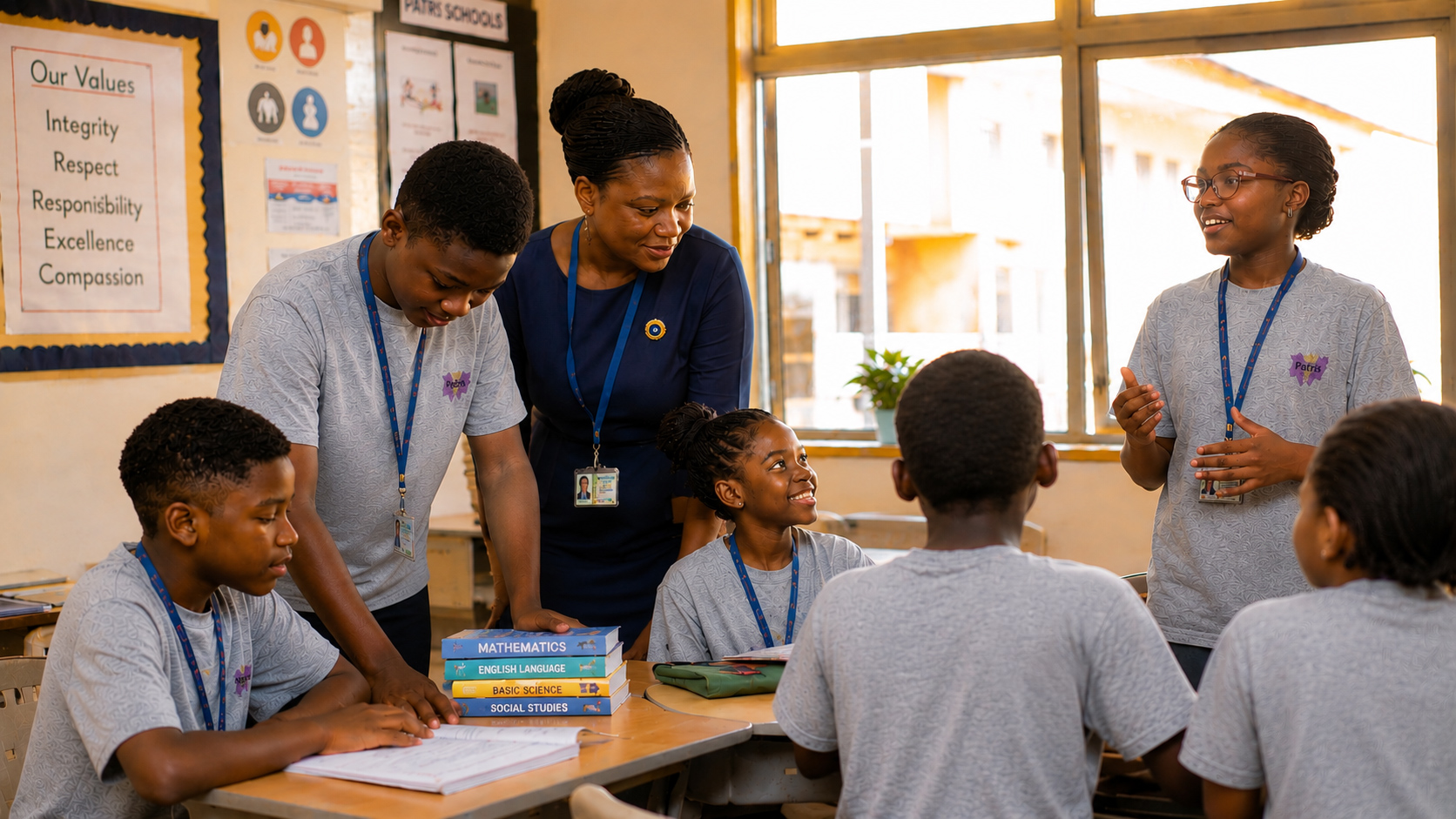
A seven-year-old carefully places his books back on the classroom shelf before joining his classmates for lunch. No teacher reminds him. No prefect is watching. He simply knows that shared spaces deserve care because someone once taught him that responsibility is an act of respect.
Across the room, another student quietly encourages a classmate who is struggling with an assignment instead of laughing at the mistake. During sports practice, a group of older students remain behind to return equipment to storage before heading home.
These moments rarely make headlines, yet they reveal something profound about education.
Table of contents
- Character is formed long before it is tested.
- Rethinking Discipline: More Than Rules and Punishment
- How Discipline Creates Freedom
- The Science Behind Self-Discipline
- Key Takeaways
- Discipline Is Not the Same as Punishment
- Building Discipline Through Partnership: Why Parents and Schools Must Work Together
- Relationships Come Before Rules
- What Discipline Looks Like in the Classroom
- Encouraging Responsibility Instead of Dependence
- How Discipline Evolves as Children Grow
- Practical Ways Families Can Build Self-Discipline at Home
- Common Misconceptions About Discipline
- Healthy Discipline vs Unhealthy Discipline
- A Parent’s Checklist for Building Discipline That Leads to Freedom
- The Lasting Freedom That Discipline Makes Possible
- Key Takeaways
- Practical Next Steps for Parents
- The Patris Commitment
- Conclusion
- FAQ
- Discussion Question
Character is formed long before it is tested.
Many parents understandably think of discipline as correcting poor behaviour or enforcing rules. Some associate it with punishment, while others worry that too much discipline may limit a child’s creativity or independence. Yet decades of educational research paint a very different picture. Healthy discipline, when rooted in respect, consistency, and guidance, is one of the strongest predictors of a child’s ability to thrive academically, socially, emotionally, and professionally later in life (American Psychological Association, 2020; OECD, 2021).
This is why the phrase “discipline is freedom” may sound surprising at first.
- How can boundaries create freedom?
- How can structure encourage creativity?
- How can responsibility lead to confidence?
These questions sit at the heart of great education.
At Patris Schools, we believe education is not simply about helping children pass examinations. It is about forming young people who can govern themselves wisely, make responsible choices, contribute positively to society, and pursue lives of purpose. Academic excellence certainly matters, but it becomes far more meaningful when it is supported by integrity, resilience, compassion, and self-control.
The greatest form of discipline is not obedience when someone is watching, but wisdom when no one is.
Research consistently supports this understanding. The Harvard Center on the Developing Child explains that executive function skills such as planning, attention, emotional regulation, and self-control develop gradually through supportive relationships, consistent routines, and opportunities to practise responsible decision-making rather than through fear or punishment alone (Harvard Center on the Developing Child, 2023). Likewise, the Collaborative for Academic, Social, and Emotional Learning (CASEL) identifies self-management as one of the five essential competencies children need for lifelong success (CASEL, 2024).
Discipline, therefore, is not the opposite of freedom.
It is one of its foundations.
Children who learn to manage their emotions enjoy healthier friendships. Students who develop consistent study habits gain greater confidence in their abilities. Young people who learn responsibility early are often better equipped to make wise decisions when faced with the greater freedoms of university, work, and adulthood. In each case, discipline expands possibilities rather than restricting them.
Throughout this article, we will explore what discipline truly means, why it matters for children’s development, what educational research tells us, and how parents and schools can work together to cultivate habits that empower children for life. We will also examine how the Patris philosophy approaches discipline, not as control, but as formation, helping every child grow in wisdom, responsibility, competence, and purpose.
Because true freedom is not found in doing whatever we want.
It is found in becoming the kind of people who can choose what is right.
Rethinking Discipline:
More Than Rules and Punishment
What does “discipline is freedom” mean?
|Discipline is freedom means that consistent habits, self-control, and personal responsibility give children the ability to make wise choices, achieve meaningful goals, and enjoy greater independence. Rather than limiting freedom, healthy discipline equips children with the character and skills needed to flourish throughout life.
Many conversations about discipline begin with behaviour.
Educational research suggests they should begin with formation.
Too often, discipline is reduced to correcting mistakes, issuing consequences, or maintaining order. While these aspects have a place within every healthy school and family, they represent only a small part of what genuine discipline seeks to accomplish.
The word discipline itself offers an important clue. It originates from the Latin disciplina, meaning instruction, learning, or teaching. Closely related is discipulus, from which we derive the English word disciple, referring to someone committed to learning from a teacher. Historically, discipline was never primarily about punishment. It was about the intentional formation of character through learning, practice, guidance, and example.
This understanding aligns closely with modern developmental science. According to the American Academy of Pediatrics, effective discipline helps children develop self-regulation, responsibility, and problem-solving skills while preserving strong, supportive relationships with caring adults (Sege & Siegel, 2018). In other words, the goal is not merely compliance but competence.
At Patris Schools, discipline is viewed through this broader lens. We believe the most enduring form of discipline is internal rather than external. Rules may influence behaviour temporarily, but character shapes choices for a lifetime.
Rules may control behaviour for a moment. Character guides decisions for a lifetime
When children understand why honesty matters, why punctuality shows respect, or why perseverance leads to growth, they begin to make responsible choices even when no adult is present. This transition from external control to internal responsibility marks one of education’s greatest achievements.
Research by psychologist Albert Bandura further reinforces this principle. Through Social Learning Theory, Bandura demonstrated that children learn not only through instruction but also by observing the behaviours, attitudes, and habits of significant adults in their lives (Bandura, 1977). Parents and teachers therefore shape discipline not only through the rules they establish but through the example they consistently model.
This explains why children often imitate patience, kindness, honesty, and resilience long before they fully understand these qualities intellectually.
Discipline, then, is less about demanding obedience and more about cultivating the habits that enable children to govern themselves wisely.
Take a Moment to Reflect
As parents and educators, are we primarily trying to control children’s behaviour today, or are we intentionally shaping the character they will carry into adulthood?
How Discipline Creates Freedom
Imagine two students preparing for an important examination.
The first has learned to manage time, complete assignments consistently, ask for help when needed, and persevere through difficult subjects. The second waits until the night before the examination to begin studying, becomes overwhelmed, and struggles to stay focused.
Both students want success.
Only one has developed the habits that make success more likely.
This simple example illustrates why discipline is not the enemy of freedom. It is the path to it.
Freedom is often misunderstood as the absence of limits. In reality, lasting freedom is the ability to choose what is good, even when doing so requires effort. Children who can regulate their emotions, delay gratification, honour commitments, and remain focused amid distractions enjoy far greater freedom than those who are controlled by impulse or circumstance.
At Patris Schools, we believe discipline is not about restricting a child’s potential. It is about expanding it. Every healthy routine, every act of responsibility, and every lesson in perseverance equips children with tools they will draw upon for the rest of their lives.
Freedom is not the absence of boundaries. It is the ability to make wise choices within them.
The Marshmallow Test, developed by Walter Mischel and colleagues in 1989, examined children’s ability to delay gratification by choosing between one immediate marshmallow or two if they waited, with early findings linking stronger self-control to better academic, social, and health outcomes later in life.
Subsequent research by scholars including Tyler Watts (2018) showed that these relationships are also strongly influenced by family environment, socioeconomic conditions, and the reliability of a child’s surroundings, indicating that success is not determined by willpower alone.
Together, these findings reinforce educational research that views self-regulation as a vital skill that can be nurtured through supportive environments and intentional learning experiences rather than treated as an innate trait.
Similarly, the Organisation for Economic Co-operation and Development (OECD) has consistently reported that social and emotional competencies, including perseverance, self-control, and responsibility, contribute significantly to students’ well-being, academic achievement, and future employability (OECD, 2021).
The implication is clear: discipline is not simply about helping children behave well today. It prepares them to flourish tomorrow.
The Science Behind Self-Discipline
Self-discipline develops gradually as children’s brains mature. Supportive relationships, consistent routines, guided practice, and opportunities to make responsible decisions strengthen the executive function skills that underpin self-control.
Modern neuroscience has transformed our understanding of child development.
Scientists now know that the brain continues developing well into early adulthood. One of the last areas to mature is the prefrontal cortex, the region responsible for planning, decision-making, impulse control, attention, and emotional regulation (Harvard Center on the Developing Child, 2023).
This means children are not born with fully developed self-discipline.
- They learn it.
- Every bedtime routine.
- Every classroom expectation.
- Every opportunity to apologise sincerely.
- Every chance to complete a task independently.
Each experience strengthens the neural pathways that support executive function.
According to the Harvard Center on the Developing Child, executive function skills are built through repeated practice in environments where adults provide structure, encouragement, and gradually increasing responsibility. Children benefit most when expectations are high but appropriate for their developmental stage (Harvard Center on the Developing Child, 2023).
This understanding changes the way we think about discipline.
Instead of asking,
“How do we stop this behaviour?”
we begin asking,
“What skill is this child still learning?”
That shift reflects a formation-centred approach to education.
At Patris Schools, discipline is seen as coaching children towards maturity rather than simply correcting mistakes. Teachers intentionally create routines that help students organise themselves, collaborate respectfully, solve problems, and reflect on their choices.
These daily habits shape character in ways that punishment alone never can.
Discipline Builds Executive Function
Executive function is sometimes described as the brain’s “air traffic control system.” It helps children organise thoughts, manage emotions, prioritise tasks, remember instructions, and adapt to changing situations. An impressive illustration of this system would be the renowned animated film Inside Out.
Children with strong executive function are more likely to:
- Stay focused during lessons.
- Complete assignments independently.
- Manage frustration constructively.
- Resolve conflicts respectfully.
- Plan ahead.
- Persist through challenges.
- Adapt to new situations.
These abilities influence far more than academic achievement. They affect relationships, leadership, financial responsibility, workplace success, and lifelong wellbeing.
Key Takeaways
| Discipline Focus | Long-Term Freedom It Creates |
| Time management | Greater independence and productivity |
| Emotional regulation | Healthier friendships and relationships |
| Responsibility | Increased trust and leadership opportunities |
| Perseverance | Confidence in overcoming challenges |
| Respect for others | Stronger communities and teamwork |
| Consistent routines | Reduced stress and better organisation |
Discipline Is Not the Same as Punishment
Punishment focuses on the consequences of wrongdoing, while discipline focuses on teaching children the knowledge, habits, and values they need to make better choices in the future.
One of the greatest misconceptions about discipline is that it simply means punishment.
They are related, but they are not identical.
Punishment asks:
“What consequences should follow this behaviour?”
Discipline asks:
“What can this child learn from this experience?”
The American Academy of Pediatrics recommends discipline strategies that are respectful, consistent, and aimed at teaching rather than shaming children. Harsh or fear-based discipline may produce immediate compliance, but it is less effective in promoting long-term self-regulation and can negatively affect children’s emotional development (Sege & Siegel, 2018).
Healthy discipline therefore includes:
- Clear expectations.
- Consistent routines.
- Logical consequences.
- Positive reinforcement.
- Open communication.
- Opportunities to repair mistakes.
- Encouragement and guidance.
These practices help children understand both responsibility and grace.
They learn that mistakes have consequences, but mistakes also become opportunities for growth.
This reflects one of the central beliefs of Patris Schools:
“Every correction should move a child closer to wisdom, never further from dignity.”
— Dr. Dotun Reju
A Classroom Example
A Grade Five student forgets to submit a group assignment.
A punishment-focused response might simply involve removing privileges.
A formation-focused response looks deeper.
The teacher meets with the student to explore what happened.
Did the student struggle with organisation?
Was there confusion about expectations?
Did the student underestimate the time required?
Together, they create a plan:
- Use a homework planner.
- Break larger assignments into smaller tasks.
- Set reminders.
- Check progress midway through the week.
- Reflect after completing the next assignment.
The student still accepts responsibility.
But now they also gain practical skills.
That is discipline.
Reflection on this
Think about a habit that has given you greater freedom as an adult.
Perhaps it is budgeting, exercising regularly, keeping your promises, managing your time well, or communicating respectfully during conflict.
How might intentionally modelling that habit help shape the life of the young people in your care?
Building Discipline Through Partnership: Why Parents and Schools Must Work Together
Children develop lasting self-discipline most effectively when parents and schools share consistent expectations, communicate openly, and model the same core values. Consistency across home and school helps children internalise responsibility rather than simply comply with rules.
A child spends only part of the day in school. The habits formed during those hours are either strengthened or weakened by what happens at home.
When parents and teachers work in isolation, children often receive mixed messages. A behaviour encouraged in one environment may be ignored or discouraged in another. Over time, inconsistency creates confusion.
By contrast, when home and school reinforce the same values, children experience stability. They begin to understand that honesty, responsibility, kindness, punctuality, and perseverance are not merely “school rules” or “home rules.” They are life principles.
At Patris Schools, we view parents as partners in formation. Education is most effective when schools and families share a common vision for the kind of adults they hope children will become.
A child’s character is shaped not by one influential adult, but by a community of adults who live the same values consistently.
Research supports this collaborative approach. According to UNESCO, meaningful family engagement contributes to improved learning outcomes, stronger wellbeing, and greater social development. Likewise, developmental psychologist Urie Bronfenbrenner argued through his Ecological Systems Theory that children’s development is profoundly influenced by the interaction between home, school, and the wider community (Bronfenbrenner, 1979; UNESCO, 2023).
When these environments work together, discipline becomes a shared culture rather than a series of isolated interventions.
Relationships Come Before Rules
Children are more likely to accept guidance from adults with whom they have trusting, respectful relationships. Effective discipline begins with connection, not control.
Think about a teacher who made a lasting difference in your life.
Chances are, you remember more than the lessons they taught. You remember how they listened, encouraged, challenged, or believed in you.
Children respond similarly.
Rules matter, but relationships give those rules meaning.
Research consistently shows that supportive relationships with caring adults promote resilience, emotional regulation, and positive behaviour (Harvard Center on the Developing Child, 2023). When children feel safe and valued, they are more willing to accept correction because they trust that it comes from a place of care.
This does not mean avoiding boundaries.
It means delivering those boundaries with respect, empathy, and consistency.
A calm conversation often teaches more than an angry lecture.
Listening before correcting often reveals the real issue.
At Patris Schools, teachers strive to know each learner as a person. Understanding a child’s strengths, challenges, interests, and circumstances allows discipline to become personal, restorative, and formative rather than merely reactive.
What Relationship-Based Discipline Looks Like
Instead of asking:
“How do I stop this behaviour?”
Teachers and parents ask:
- What happened?
- What need or skill might be behind this behaviour?
- What can this child learn from this experience?
- How can I help them make a better choice next time?
This approach encourages accountability while preserving the child’s dignity.
What Discipline Looks Like in the Classroom
An effective classroom promotes discipline through clear expectations, predictable routines, student ownership, constructive feedback, and opportunities to practise responsibility every day.
Walk into a thriving classroom and you may notice something surprising.
Students are not perfectly silent.
They are engaged.
Some are discussing ideas respectfully.
Others are collaborating on projects.
A teacher moves between groups, asking thoughtful questions rather than giving constant instructions.
The room has energy.
But it also has order.
This kind of environment does not happen by accident.
It is the result of intentional routines that help students manage themselves.
At Patris Schools, discipline is woven into daily learning experiences. Rather than treating character formation as a separate subject, it is integrated into every aspect of school life.
Examples include:
- Beginning lessons promptly to reinforce punctuality.
- Assigning rotating leadership responsibilities.
- Encouraging students to resolve minor disagreements respectfully.
- Reflecting on mistakes after assessments.
- Working collaboratively on long-term projects.
- Caring for shared classroom resources.
- Celebrating perseverance as much as achievement.
These everyday practices help students understand that responsibility is not an occasional requirement but a way of life.
Everyday Classroom Practices That Build Self-Discipline
| Classroom Practice | Character Trait Developed | Long-Term Benefit |
| Morning routines | Responsibility | Independence |
| Student leadership roles | Confidence | Leadership skills |
| Group projects | Cooperation | Teamwork |
| Reflection journals | Self-awareness | Better decision-making |
| Classroom responsibilities | Stewardship | Ownership and accountability |
| Goal-setting activities | Perseverance | Resilience |
These routines may appear ordinary, but their cumulative impact is extraordinary.
Character grows through repeated practice.
Encouraging Responsibility Instead of Dependence
Children become responsible when adults gradually transfer appropriate responsibility to them while providing guidance, encouragement, and opportunities to learn from mistakes.
One of the greatest gifts adults can give children is the opportunity to take responsibility.
This can feel uncomfortable.
Parents naturally want to protect their children from failure.
Teachers may be tempted to solve every problem quickly.
Yet growth often happens when children are trusted with meaningful responsibilities.
Developmental psychologist Jean Piaget observed that children actively construct knowledge through experience rather than passively receiving information (Piaget, 1952). Similarly, Lev Vygotsky emphasised the importance of guided participation, where adults provide support until children can perform tasks independently (Vygotsky, 1978).
This educational principle is sometimes described as “scaffolding.”
Adults provide enough support for success while gradually removing assistance as competence grows.
Examples include:
- Allowing children to pack their own school bags.
- Encouraging students to organise their study schedules.
- Giving older learners responsibility for mentoring younger students.
- Allowing children to experience logical consequences when appropriate.
- Involving students in setting personal learning goals.
Responsibility grows when responsibility is practised.
Children become responsible not because adults do everything for them, but because caring adults gradually teach them to do more for themselves.
Reflect on this
Think about one responsibility you currently manage for your child or student.
Could this become an opportunity for learning instead?
What guidance would help them succeed while allowing them to grow in confidence?
How Discipline Evolves as Children Grow
Effective discipline changes as children mature. Younger children need simple routines and clear boundaries, while older children benefit from increasing responsibility, guided decision-making, and opportunities to exercise independence.
One of the most common parenting mistakes is assuming that the same approach to discipline should work at every age.
Children grow rapidly, and so do their emotional, cognitive, and social abilities. A strategy that works beautifully with a five-year-old may frustrate a teenager. Likewise, giving a young child too much independence too soon can be just as unhelpful as over-controlling an adolescent who is ready for greater responsibility.
At Patris Schools, we believe discipline should mature alongside the child. As children grow in understanding and capability, adults gradually move from directing behaviour to coaching decision-making. The goal is not lifelong dependence on authority but the development of wise, self-governing young people.
Educational psychologist Erik Erikson proposed that children pass through developmental stages in which they build confidence, competence, identity, and responsibility through age-appropriate experiences (Erikson, 1963). Discipline that respects these developmental stages is more likely to foster resilience and healthy self-esteem.
Early Childhood (Ages 3–6)
During the early years, children are learning the basic building blocks of self-control. They are naturally curious, energetic, and still developing the ability to regulate their emotions.
Discipline at this stage should focus on:
- Establishing predictable daily routines.
- Using simple, clear instructions.
- Teaching rather than assuming appropriate behaviour.
- Modelling kindness, patience, and respect.
- Praising effort and positive choices.
- Using logical and age-appropriate consequences.
Young children thrive when expectations are consistent. Repetition is not a sign that discipline is failing; it is part of how young children learn.
Research from the Harvard Center on the Developing Child shows that consistent routines help strengthen executive function, emotional regulation, and a child’s sense of security (Harvard Center on the Developing Child, 2023).
Primary School Years (Ages 7–11)
As children enter the primary years, they become increasingly capable of understanding cause and effect, reflecting on their actions, and accepting greater responsibility.
This is an ideal stage for developing habits that will serve them throughout life.
Parents and teachers can encourage:
- Independent homework routines.
- Personal organisation.
- Responsibility for belongings.
- Goal setting.
- Teamwork.
- Service to others.
- Reflection after mistakes.
Rather than solving every problem, adults can begin asking thoughtful questions such as:
- “What do you think happened?”
- “How could you handle this differently next time?”
- “What would help you succeed?”
These conversations help children develop metacognition—the ability to think about their own thinking—which educational researcher John Hattie identifies as an important contributor to effective learning (Hattie, 2023).
Adolescence (Ages 12–18)
Teenagers naturally seek greater independence.
This is healthy.
The challenge for parents and educators is balancing increasing freedom with increasing responsibility.
Rather than relying solely on rules, discipline during adolescence should include:
- Collaborative conversations.
- Clear expectations.
- Opportunities to make decisions.
- Accountability for choices.
- Respectful discussion of consequences.
- Encouragement to reflect on values and long-term goals.
Teenagers are more likely to cooperate when they understand the purpose behind expectations rather than feeling that rules are arbitrary.
This is also the stage when trusted relationships become especially important. Adolescents are strongly influenced by peers, yet research consistently shows that caring relationships with parents and teachers remain powerful protective factors for wellbeing and positive decision-making (OECD, 2021; UNICEF, 2021).
As children grow, discipline should sound less like commands and more like conversations that prepare them for wise adulthood.
Practical Ways Families Can Build Self-Discipline at Home
Families build self-discipline by creating consistent routines, modelling positive habits, encouraging responsibility, allowing children to learn from mistakes, and celebrating growth rather than perfection.
The home is a child’s first classroom.
Long before children encounter teachers, they are observing how adults respond to frustration, manage time, keep promises, speak to others, and handle disappointment.
Children learn discipline by watching discipline.
This is why family culture matters so deeply.
Small, consistent habits often have a greater influence than occasional lectures.
At Patris Schools, we encourage families to focus on progress rather than perfection. Character is formed through thousands of ordinary moments that gradually shape extraordinary people.
Five Daily Habits That Build Discipline
1. Establish Predictable Routines
Morning routines, homework schedules, family meals, and regular bedtimes provide children with structure and security.
Predictable routines reduce unnecessary conflict because children know what to expect.
2. Give Children Meaningful Responsibilities
Age-appropriate household responsibilities help children understand that they are valuable contributors to family life.
Examples include:
- Making their bed.
- Feeding a family pet.
- Organising school materials.
- Helping prepare meals.
- Tidying shared spaces.
Responsibility develops through participation.
3. Allow Natural and Logical Consequences
Rescuing children from every mistake may unintentionally delay the development of responsibility.
For example:
- Forgetting homework may result in explaining the situation to a teacher.
- Neglecting chores may reduce free time until responsibilities are completed.
Logical consequences teach responsibility without humiliation.
4. Celebrate Effort, Persistence, and Growth
Research by Carol Dweck demonstrates that praising effort, effective strategies, and perseverance encourages a growth mindset, helping children view challenges as opportunities to learn rather than evidence of failure (Dweck, 2006).
Instead of saying:
“You’re so smart.”
Try saying:
“I’m proud of how patiently you worked through that challenge.”
This reinforces behaviours children can continue to develop.
5. Model the Behaviour You Hope to See
Children quickly notice inconsistency.
If adults expect honesty, they must practise honesty.
As adults value punctuality, they should strive to arrive on time.
Adults want children to apologise sincerely, they should be willing to apologise when they make mistakes.
As psychologist Albert Bandura demonstrated, observation is one of the most powerful ways children learn (Bandura, 1977).
Family Discussion Activity
Once each week, gather as a family and discuss one question together.
Example include:
- What challenge did you overcome this week?
- What situation has made you show responsibility?
- Did you make a mistake that helped you learn something important?
- How did someone show kindness to you this week?
- What goal would you like to work on next week?
These conversations help children connect discipline with reflection, gratitude, and personal growth.
Parent Reflection
At the end of each week, ask yourself:
- Did my child experience consistent expectations?
- Did I correct behaviour while preserving dignity?
- Did I model the habits I expect?
- Did I notice and affirm positive choices?
- Did I help my child grow in responsibility rather than dependence?
These simple questions can gradually transform family culture.
Common Misconceptions About Discipline
Healthy discipline is not about punishment, control, or perfection. It is about intentionally teaching children the habits, values, and decision-making skills they need to become responsible, compassionate, and self-directed adults.
Few aspects of parenting and education are surrounded by as many misconceptions as discipline. Well-meaning adults sometimes confuse firmness with harshness, kindness with permissiveness, or freedom with the absence of boundaries.
These misunderstandings can make it difficult to cultivate the kind of discipline that truly prepares children for life.
At Patris Schools, we encourage parents and educators to move beyond these misconceptions and embrace a formation-centred approach that combines high expectations with genuine care.
Myth 1: Discipline Means Punishment
Punishment may stop an undesirable behaviour temporarily, but discipline seeks lasting transformation.
Healthy discipline asks not only, “What happened?” but also, “What can this child learn?”
Children who understand the reasons behind expectations are more likely to internalise values than those who simply fear consequences. According to the American Academy of Pediatrics, effective discipline should help children develop self-regulation, responsibility, and problem-solving skills while preserving warm, supportive relationships (Sege & Siegel, 2018).
Myth 2: Strict Rules Automatically Build Character
Rules are important, but rules alone do not produce wisdom.
A child may obey because an adult is present yet make poor decisions when no one is watching.
Character develops when children understand the purpose behind expectations and have opportunities to practise making responsible choices.
This is why conversations, reflection, and modelling are just as important as consequences.
Myth 3: Freedom Means Children Should Decide Everything
Giving children unlimited choice is not the same as preparing them for adulthood.
Children need guidance that gradually expands as they mature.
Appropriate freedom grows alongside responsibility.
A young child may choose between two healthy lunch options.
A teenager may participate in setting study schedules while remaining accountable for academic commitments.
Freedom without wisdom can become confusion.
Wisdom makes freedom meaningful.
Myth 4: Mistakes Mean Discipline Has Failed
Children will make mistakes.
In fact, mistakes are often among the most powerful teachers.
Rather than viewing failure as evidence that discipline is ineffective, adults can view it as an opportunity to develop resilience, honesty, and problem-solving.
Educational psychologist Carol Dweck reminds us that growth occurs when learners see setbacks as opportunities for improvement rather than permanent indicators of ability (Dweck, 2006).
Every mistake can become a lesson when correction is guided by wisdom and delivered with compassion.
Healthy Discipline vs Unhealthy Discipline
Healthy discipline teaches children how to think and act responsibly. Unhealthy discipline relies primarily on fear, shame, or inconsistent expectations, often producing short-term compliance instead of lasting character.
| Healthy Discipline | Unhealthy Discipline |
| Teaches responsibility | Demands blind obedience |
| Explains expectations | Relies on fear |
| Builds trust | Damages relationships |
| Uses logical consequences | Uses humiliation or shame |
| Encourages reflection | Discourages questions |
| Focuses on long-term growth | Focuses only on immediate compliance |
| Preserves dignity | Attacks identity |
| Develops self-control | Creates dependence on external control |
The goal of discipline is not simply well-behaved children.
It is well-formed adults.
A Parent’s Checklist for Building Discipline That Leads to Freedom
Discipline is most effective when it becomes part of everyday family life rather than a response only to problems.
Use this checklist as a simple guide.
Daily Habits
☐ We maintain consistent routines.
☐ Communicate expectations clearly.
☐ Model the behaviour we expect.
☐ Encourage responsibility through age-appropriate tasks.
☐ Praise effort, perseverance, and integrity.
☐ Remain calm when correcting mistakes.
☐ Allow logical consequences where appropriate.
☐ Listen before making assumptions.
☐ Apologise when we are wrong.
☐ Celebrate growth more than perfection.
No family will complete this checklist perfectly every day.
The aim is steady progress.
Five Principles of Discipline That Creates Freedom
| Principle | Why It Matters |
| Relationship before correction | Children learn best when they feel secure and respected. |
| Consistency over intensity | Predictable expectations build trust and healthy habits. |
| Responsibility before reward | Responsibility prepares children for lasting independence. |
| Reflection after mistakes | Mistakes become opportunities for wisdom and growth. |
| Character above compliance | The goal is lifelong integrity, not temporary obedience. |
Reflection Prompts for Parents and Educators
Take a few moments to consider these questions:
- Which family or classroom routine has had the greatest positive influence on your children?
- Are there areas where expectations could be more consistent?
- How do children in your care respond when they make mistakes?
- What habits are you intentionally modelling each day?
- If your child remembered one lesson about discipline twenty years from now, what would you hope it would be?
These reflections remind us that discipline is not measured only by today’s behaviour but by the lifelong character it helps to shape.
The Lasting Freedom That Discipline Makes Possible
The ultimate goal of discipline is not obedient children but responsible adults. When children develop self-control, resilience, integrity, and wisdom, they gain the freedom to make sound decisions, build healthy relationships, and contribute meaningfully to society.
Every parent hopes their child will flourish.
We hope they will discover meaningful work, build strong relationships, overcome adversity, contribute positively to their communities, and live with confidence and purpose.
Yet these aspirations are not achieved by academic knowledge alone.
A child may excel in mathematics yet struggle to keep commitments.
Another may possess remarkable creativity but lack the perseverance to finish important work.
Still another may earn impressive qualifications while finding it difficult to manage emotions, resolve conflict, or make ethical decisions under pressure.
Education, therefore, must reach beyond the intellect.
It must shape the whole person.
This conviction lies at the heart of the Patris philosophy. We believe that every lesson, every classroom routine, every conversation, and every moment of correction contributes to the formation of character. Discipline is one of the primary ways this formation takes place.
When children learn to tell the truth even when it is difficult, they gain the freedom that comes from integrity.
When they develop habits of perseverance, they gain the freedom to pursue ambitious goals without giving up at the first obstacle.
When they learn empathy and respect, they gain the freedom to build relationships rooted in trust.
When they practise self-control, they gain the freedom to make wise decisions rather than being governed by impulse.
These freedoms are not granted overnight.
They are cultivated through thousands of ordinary choices, supported by families, teachers, mentors, and communities that believe children are capable of growth.
Research from the OECD continues to affirm that competencies such as self-management, responsibility, collaboration, and emotional regulation are essential for success in school, work, and civic life (OECD, 2021). Likewise, UNESCO emphasises that education should prepare learners not only for employment but also for responsible citizenship, lifelong learning, and human flourishing (UNESCO, 2021).
These aspirations closely reflect what Patris Schools seeks to nurture every day.
Our greatest success is not measured only by the examinations our students pass, but by the lives they are prepared to lead.
Key Takeaways
If there is one message to remember from this article, it is this:
Discipline is not the opposite of freedom. It is one of its greatest foundations.
Healthy discipline equips children with the habits, values, and decision-making skills they need to thrive throughout life.
Here are the most important lessons:
- Discipline is about formation, not punishment.
- Strong relationships make discipline more effective.
- Self-discipline develops gradually through consistent practice.
- Parents and schools achieve the greatest impact when they work together.
- Responsibility should increase as children mature.
- Mistakes are opportunities for learning and growth.
- Character matters as much as academic achievement.
- Lasting freedom comes from wisdom, integrity, perseverance, and self-control.
Practical Next Steps for Parents
Character formation happens one day at a time.
You do not need to transform your family’s routines overnight.
Instead, begin with one intentional step.
This week, consider choosing one of the following actions:
- Establish one consistent family routine that encourages responsibility.
- Give your child a new age-appropriate responsibility and allow them to own it.
- Replace one lecture with a reflective conversation.
- Praise effort, perseverance, honesty, or kindness rather than only outcomes.
- Schedule a conversation with your child’s teacher about shared goals for character development.
- Create a weekly family reflection where everyone shares one lesson they learned from a challenge.
Small, consistent actions often produce the greatest long-term transformation.
As educator John Dewey famously argued, education is not simply preparation for life; it is life itself (Dewey, 1916). Every ordinary interaction is an opportunity to shape the adults our children are becoming.
The Patris Commitment
At Patris Schools, we believe every child possesses remarkable potential.
Our responsibility extends beyond helping students achieve academic excellence.
We are committed to nurturing young people who:
- Think critically.
- Act with integrity.
- Serve their communities.
- Lead with humility.
- Persevere through challenges.
- Respect the dignity of others.
- Continue learning throughout life.
This is why discipline occupies such an important place within our educational philosophy.
It is not about producing perfect children.
It is about forming thoughtful, resilient, compassionate, and responsible young people who are prepared to flourish wherever life leads them.
Because education should never end with what children know.
It should be seen in who they become.
Conclusion
Every family is shaping the future—one conversation, one routine, and one example at a time.
If this article has encouraged you to think differently about discipline, we invite you to continue exploring the Patris philosophy of holistic education.
Discover how our commitment to character formation, academic excellence, purposeful leadership, and strong partnerships with parents helps prepare children not only for examinations, but for life.
Together, we can raise a generation equipped with the wisdom, resilience, and integrity to make a meaningful difference in the world.
FAQ
Discipline is freedom means that consistent habits, self-control, and personal responsibility enables one to make wise decisions independently. Rather than limiting freedom, discipline expands a child’s ability to achieve meaningful goals and live responsibly.
No. Punishment focuses on correcting behaviour after mistakes occur, while discipline focuses on teaching children the knowledge, habits, and character needed to make better decisions in the future (Sege & Siegel, 2018).
Children begin learning discipline from their earliest years through consistent routines, loving relationships, and clear expectations. Even toddlers can begin developing simple habits of responsibility appropriate to their developmental stage.
Yes. Research consistently shows that respectful, consistent, relationship-based discipline is more effective for developing long-term self-regulation than harsh or fear-based approaches (American Academy of Pediatrics, 2018).
Self-discipline helps students manage time, stay focused, complete assignments, persevere through challenges, and regulate emotions—all of which contribute significantly to learning and long-term academic achievement (OECD, 2021).
Parents can encourage self-discipline by modelling positive behaviour, establishing consistent routines, assigning age-appropriate responsibilities, allowing logical consequences, and celebrating effort and perseverance rather than perfection.
Schools contribute by creating structured learning environments where students practise responsibility, collaboration, integrity, leadership, and service every day. Character grows through repeated opportunities to apply these values in real situations.
Children are more receptive to guidance from adults they trust. Strong relationships create emotional safety, making it easier for children to accept correction, reflect on mistakes, and develop lasting self-control (Harvard Center on the Developing Child, 2023).
Yes. Freedom without guidance may overwhelm children who are still developing judgment and self-control. Healthy freedom grows alongside increasing responsibility and maturity.
At Patris Schools, discipline is viewed as an essential part of holistic education. We seek to form students who combine academic excellence with integrity, responsibility, resilience, leadership, compassion, and a lifelong commitment to learning.
Discussion Question
What daily habit has made the greatest positive difference in your child’s character or your own life, and how has it shaped the freedom to make wiser choices?
View References
Bandura, A. (1977). Social Learning Theory. Prentice Hall.
Bronfenbrenner, U. (1979). The Ecology of Human Development: Experiments by Nature and Design. Harvard University Press.
CASEL. (2024). What Is Social and Emotional Learning? https://casel.org/
Center on the Developing Child at Harvard University. (2023). Executive Function & Self-Regulation. https://developingchild.harvard.edu/
Dewey, J. (1916). Democracy and Education. Macmillan.
Dweck, C. S. (2006). Mindset: The New Psychology of Success. Random House.
Erikson, E. H. (1963). Childhood and Society (2nd ed.). W. W. Norton.
Hattie, J. (2023). Visible Learning: The Sequel. Routledge.
Mischel, W., Shoda, Y., & Rodriguez, M. L. (1989). Delay of gratification in children. Science, 244(4907), 933–938.
OECD. (2021). Beyond Academic Learning: First Results from the Survey on Social and Emotional Skills. OECD Publishing.
Piaget, J. (1952). The Origins of Intelligence in Children. International Universities Press.
Sege, R. D., & Siegel, B. S. (2018). Effective Discipline to Raise Healthy Children. Pediatrics, 142(6), e20183112.
UNESCO. (2021). Reimagining Our Futures Together: A New Social Contract for Education. UNESCO.
UNESCO. (2023). Global Education Monitoring Report. UNESCO.
UNICEF. (2021). The State of the World’s Children 2021: On My Mind. UNICEF.
Vygotsky, L. S. (1978). Mind in Society: The Development of Higher Psychological Processes. MIT Press.
Watts, T. W., Duncan, G. J., & Quan, H. (2018). Revisiting the Marshmallow Test: A Conceptual Replication Investigating Links Between Early Delay of Gratification and Later Outcomes. Psychological Science, 29(7), 1159–1177.