

Table of contents
- Are High Examination Scores Enough to Define Quality Education?
- What Should Every High-Quality School in Nigeria Actually Deliver?
- What Does Functional Education Look Like in the Nigerian Classroom?
- How Can Parents Identify the Best Primary and Secondary Schools in Nigeria?
- What Makes a School Truly Prepare Learners for the Future?
- What Is the Patris Schools Perspective on Quality Education?
- Before Choosing a School in Nigeria: What Should Parents Do ?
- Frequently Asked Questions
- Conclusion: What Should Education in Nigeria Ultimately Achieve?
Quality education should help learners master academic knowledge, think critically, solve practical problems, develop character, use technology responsibly, and grow into capable people prepared for life beyond examinations.
A child can spend more than a decade in school, earn excellent grades, and still struggle to solve an unfamiliar problem, communicate an idea confidently, manage responsibility, or apply knowledge outside the classroom. That raises an important question: What should education actually achieve?
For many parents in Nigeria, the immediate answer is understandable: strong grades, excellent WAEC or NECO results, and access to reputable universities. These outcomes matter. But they are not the whole purpose of education.
When parents search for the best primary schools in Nigeria or the best secondary schools in Nigeria, they are often looking for something deeper. They want an environment where their children can develop academically while also growing in confidence, judgement, character, practical ability, and leadership.
Achieving genuine quality education in Nigeria requires moving beyond rote memorisation. A good education should prepare learners not only to pass examinations but also to understand what they learn, apply knowledge, think independently, work with others, solve problems, and contribute meaningfully to society. That gives parents a more useful question: What should a genuinely good school help my child become?
Are High Examination Scores Enough to Define Quality Education?
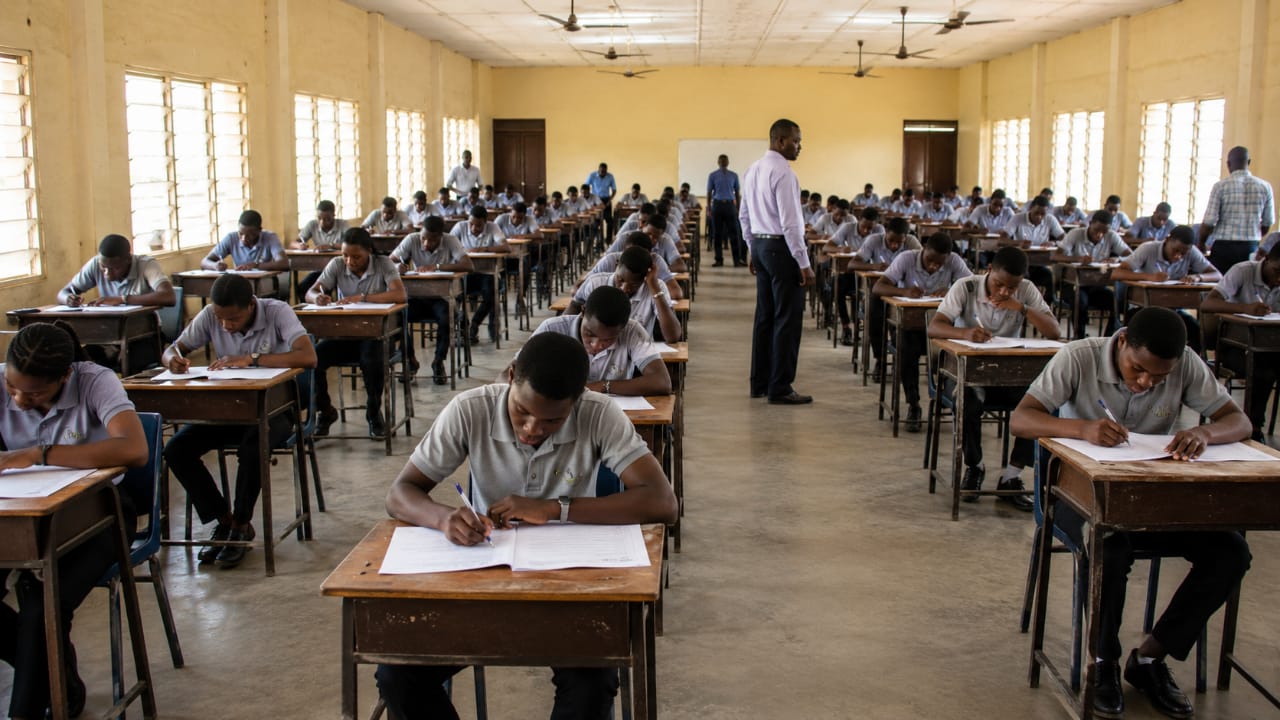
High examination scores demonstrate academic achievement, but quality education must also develop understanding, critical thinking, practical competence, communication, character, and the ability to apply knowledge in unfamiliar situations.
Nigeria has a strong examination culture. School assessments, WAEC, NECO, and UTME influence important educational opportunities. Parents naturally want their children to perform well. There is nothing wrong with expecting academic excellence. The problem begins when examination success becomes the entire definition of educational success.
Consider two learners.
- The Rote Learner: Memorises information, reproduces it accurately in an examination, and forgets much of it shortly afterwards.
- The Functional Learner: Understands a concept well enough to explain it, connect it to everyday life, question assumptions, and apply it to a new problem.
Both learners may receive good grades, but the second learner has developed something more durable: usable understanding.
The benchmark for the best schools in Nigeria quality education should therefore go beyond examination preparation. A strong school should prepare learners for WAEC and NECO while also preparing them for situations where there is no marking scheme, textbook answer, or teacher standing nearby.
The concern for parents is not simply: Does the school produce good academic results? It is also: What else does the school develop alongside those results?
What Should Every High-Quality School in Nigeria Actually Deliver?
A high-quality school should develop four connected capabilities: strong academic foundations, practical problem-solving ability, sound character and civic responsibility, and the confidence to lead and adapt.
1. Foundational Literacy, Numeracy, and Critical Thinking
Everything else depends on strong foundations.
Learners need to read with understanding, communicate clearly, and work confidently with numbers.
Literacy extends far beyond pronouncing words. A functionally literate learner should be able to understand complex information, identify important ideas, compare viewpoints, ask meaningful questions, and communicate clearly.
Numeracy should also extend beyond classroom calculations. Learners should become capable of understanding:
- Prices and percentages
- Measurements and quantities
- Household budgets
- Charts and data
- Everyday financial decisions
Then comes critical thinking. Good teaching should move beyond asking only, “What is the answer?”
It should also ask:
- How did you arrive at that answer?
- What evidence supports your conclusion?
- Could there be another explanation?
- What happens if the situation changes?
- How else could this problem be solved?
In an age shaped by social media, artificial intelligence, and unlimited digital information, the ability to think critically has become essential. A learner who cannot evaluate information may know many facts but still struggle to make sound decisions.
2. Functional Skills, STEM, and Practical Problem-Solving
Education should help learners understand how knowledge works in real situations. This is where functional education in Nigeria becomes important.
Functional education does not mean replacing academic learning with vocational activity. It means creating a stronger connection between knowing and doing.
For example:
- Science: Learners observe, experiment, test ideas, and draw conclusions.
- Mathematics: Learners analyse real data and solve practical problems involving measurement, budgeting, and planning.
- ICT and Computing: Learners create digital solutions instead of merely memorising computer terminology.
- Project-Based Learning: Learners research, collaborate, budget, communicate, and develop solutions.
The goal is not to replace theory with practice. The goal is to connect the two.
Developing practical skills for Nigerian youth means helping learners discover that knowledge becomes more valuable when they can apply it to real situations.
3. Character Formation, Integrity, and Civic Responsibility
Education shapes more than intellectual ability, it also influences how young people make decisions. This is why character development in Nigerian learners should not appear only during occasional moral instruction classes.
Character develops through repeated experiences.
For example:
- Completing tasks independently builds accountability.
- Admitting mistakes and correcting them develops honesty.
- Disagreeing respectfully builds emotional maturity.
- Working in teams develops responsibility.
- Participating in community activities encourages civic consciousness.
The strongest schools reinforce these qualities through everyday school life, including classroom expectations, sports, leadership opportunities, collaborative projects, mentoring, discipline, and the behaviour modelled by adults.
Academic intelligence without character can be poorly directed. Quality education must therefore develop both: Competence and conscience.
4. Leadership, Digital Literacy, and Self-Reliance
Leadership should not begin only when a learner becomes a prefect. A learner demonstrates leadership whenever they:
- Organise a group task
- Take responsibility for a project
- Help solve a conflict
- Assist another learner
- Present an idea confidently
- Take initiative without waiting to be instructed
Leadership development in Nigerian schools should therefore provide regular opportunities for responsibility.
Digital literacy is equally important. Learners need more than the ability to operate devices. They should understand how to:
- Search for reliable information
- Evaluate online sources
- Communicate responsibly
- Create using digital tools
- Understand basic cybersecurity
- Use technology ethically
The larger goal is self-reliance. Young Nigerians will enter a world where industries, technologies, and career paths continue to change.
Schools cannot predict every future profession. They can, however, develop learners who know how to keep learning.
What Does Functional Education Look Like in the Nigerian Classroom?
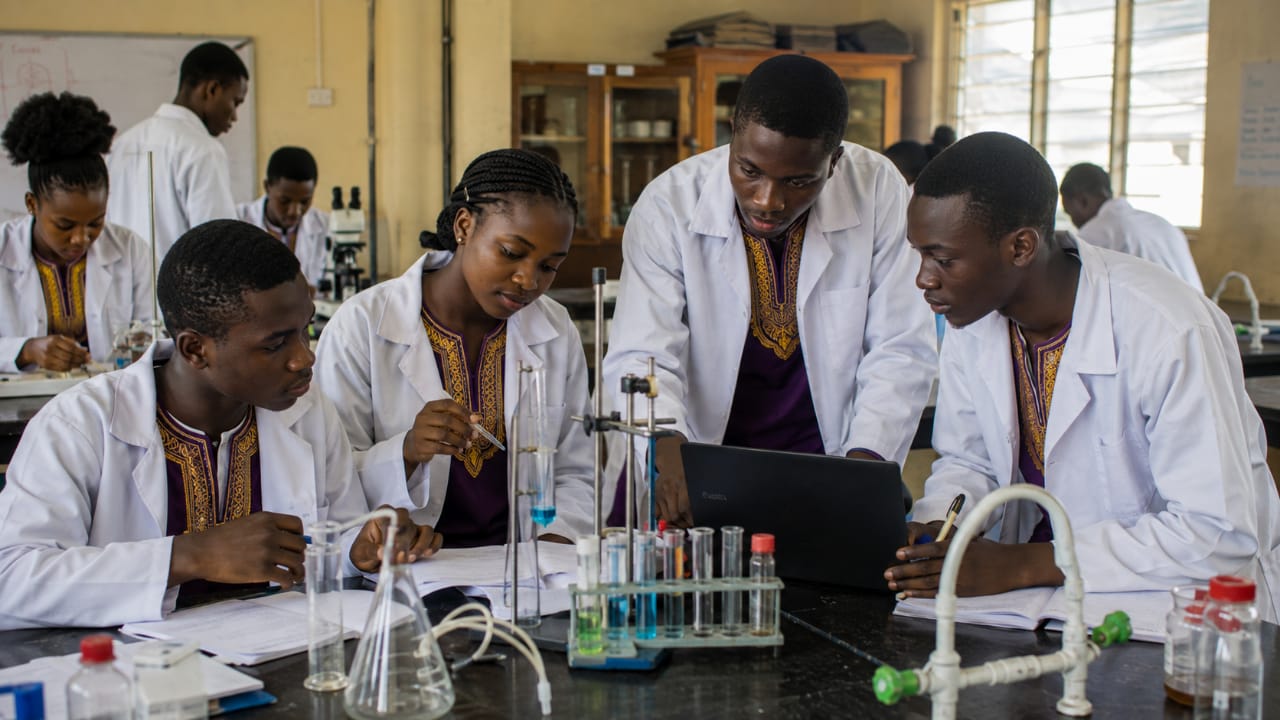
Functional education connects academic knowledge with practical application, helping learners understand concepts deeply while developing problem-solving, communication, collaboration, creativity, and responsible decision-making.
Functional education does not lower academic standards, it strengthens academic learning by helping learners use what they know.
Consider a lesson on environmental pollution. A purely examination-focused approach might ask learners to memorise definitions, causes, and effects. A functional approach could go further.
Learners might:
- Observe waste disposal around their school or community.
- Identify possible environmental effects.
- Research local and global solutions.
- Analyse available information.
- Work in teams to develop recommendations.
- Present their findings to others.
The learners still study the academic concepts required for examinations, but they also develop observation, research, communication, collaboration, and problem-solving skills.
The Difference Parents Should Look For
| Educational Question | Examination-Focused Model | Functional Education Model |
| What is learning for? | Primarily to pass assessments | To understand, apply, and grow |
| How do learners engage? | Listening and reproducing answers | Questioning, experimenting, discussing, and creating |
| What counts as success? | Primarily grades and scores | Knowledge, capability, character, and progress |
| Can learners use what they know? | Mainly in familiar test situations | In new and real-world situations |
| How are problems approached? | Following known methods | Analysing, adapting, testing, and improving |
| What does the learner become? | A successful examination candidate | A capable, responsible, and adaptable individual |
How Can Parents Identify the Best Primary and Secondary Schools in Nigeria?
Parents should evaluate schools beyond fees and examination results by examining teaching quality, learner engagement, character development, practical learning, pastoral care, and the institution’s educational philosophy.
Location, facilities, fees, and examination performance all matter, but they do not tell the whole story.
Parents choosing a school in Nigeria should ask deeper questions.
Eight Questions Every Parent Should Ask
1. What is the school’s educational philosophy?
Can school leaders explain what they want learners to become beyond achieving good grades?
2. Are learners actively involved in learning?
Look for questioning, discussion, experiments, projects, presentations, and collaborative work.
3. How does the school support learners who struggle?
Ask how teachers identify learning gaps and provide support.
4. How does the school develop character?
Observe how responsibility, honesty, respect, and discipline operate in daily school life.
5. What practical capabilities do learners develop?
Look for STEM, technology, enterprise, creativity, sports, projects, and clubs.
6. How does the school communicate with parents?
Strong education requires meaningful partnership between school and home.
7. What happens beyond the classroom?
Ask about leadership opportunities, mentoring, public speaking, community service, sports, and creative activities.
8. What kind of person is the school trying to build?
This may be the most revealing question of all.
Parents are not simply choosing a place where their children will attend classes. They are choosing an environment that will influence habits, confidence, relationships, judgement, and identity.
What Makes a School Truly Prepare Learners for the Future?
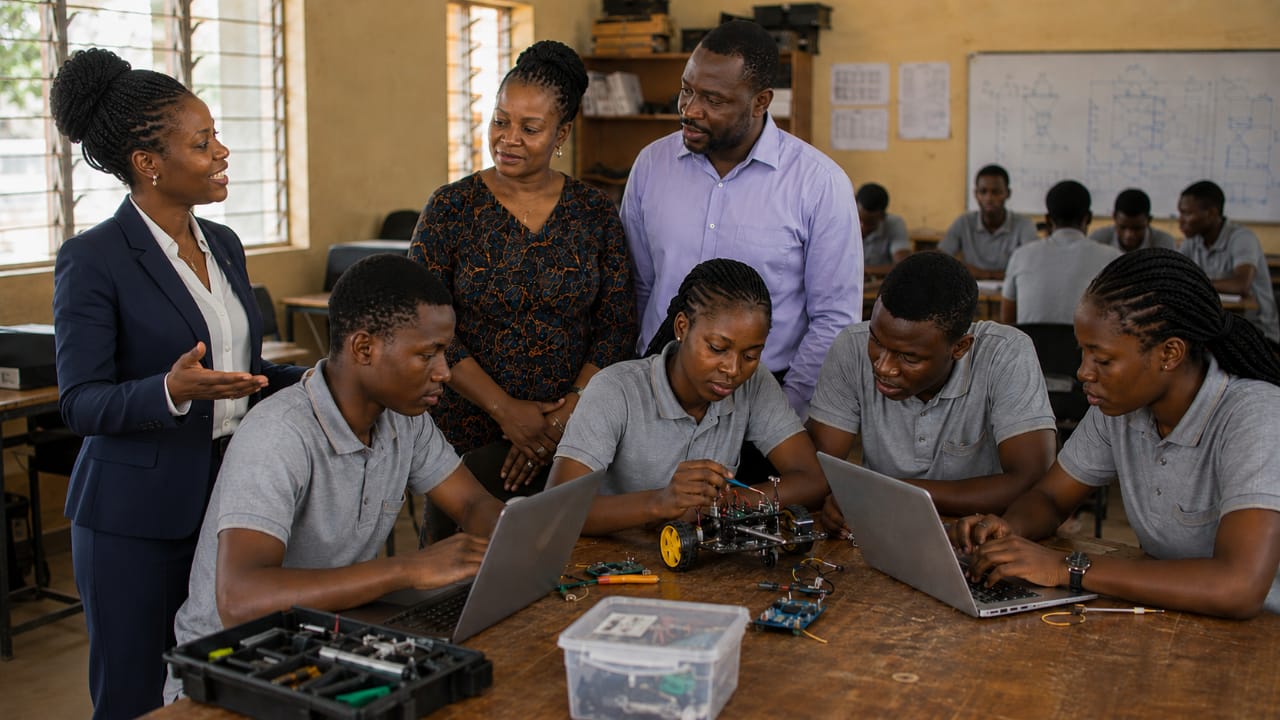
Future-ready education combines academic excellence with adaptability, digital competence, communication, ethical judgement, practical problem-solving, and the ability to continue learning throughout life.
The future facing Nigerian learners will not remain static.
Technology is changing industries. Artificial intelligence is reshaping work. New opportunities continue to emerge across local and global markets.
Schools cannot predict every future job, but they can develop capabilities that remain useful across different professions and changing circumstances. These capabilities include:
- Adaptability: The ability to respond to change.
- Continuous Learning: Learning, unlearning, and relearning.
- Critical Thinking: Evaluating information and assumptions.
- Communication: Expressing ideas clearly.
- Collaboration: Working effectively with others.
- Ethical Judgement: Making responsible decisions.
- Problem-Solving: Turning knowledge into action.
- Digital Competence: Using technology responsibly and creatively.
The strongest schools do not simply prepare learners for the next examination, they prepare them for a lifetime of learning.
What Is the Patris Schools Perspective on Quality Education?
Patris Schools combine academic development with functional education, practical learning, character formation, leadership development, and responsible citizenship to help raise capable, purpose-driven Nation Builders.
At Patris Schools, education extends beyond academic certification. The educational philosophy connects rigorous academic learning with practical application, character formation, leadership development, and responsible action.
At the primary level, learners build strong foundations in:
- Literacy
- Numeracy
- Curiosity
- Communication
- Positive social habits
At the secondary level, these foundations develop into greater:
- Independent thinking
- Problem-solving ability
- Practical competence
- Leadership capacity
- Readiness for higher education and life beyond school
This integrated approach shapes learning across Kingdom Citizens’ International School (KCIS) and Kingdom Citizens’ College (KCC). Academic achievement remains important, but achievement sits within a larger framework.
- A successful learner needs knowledge. They also need good judgement.
- They need skills. They also need character.
- They need independence. They also need the ability to work with others.
This connects directly to the Patris Schools vision of Building Nation Builders. The goal is to help raise young people who can eventually contribute meaningfully to their families, communities, professions, and society.
Visit patrisschools.org for more information and enquiries.
Before Choosing a School in Nigeria: What Should Parents Do?
Parents should make school decisions through structured evaluation, including campus visits, conversations with educators, classroom observation, learner support assessment, and careful consideration of the school’s culture and values.
Before making a final decision:
- Visit the school in person.
- Speak directly with school leaders and teachers.
- Ask about the educational philosophy.
- Observe learner-teacher interactions.
- Find out how struggling learners receive support.
- Examine how discipline and character formation work.
- Ask about practical learning and extracurricular opportunities.
- Review pastoral care, health, and boarding arrangements where relevant.
- Consider whether the school’s values align with your family’s expectations.
- Weigh the options strategically between day school, half-boarding, and full boarding.
Do not judge a school entirely by its brochure, website, or social media presence. Look for consistency between what the school promises and what learners actually experience.
Frequently Asked Questions
The best schools combine strong academic standards with quality teaching, learner support, practical learning, character development, leadership opportunities, and an educational philosophy that prepares learners for life beyond examinations.
Functional education connects academic knowledge with practical application. It helps learners understand concepts, solve real-world problems, develop useful skills, and apply learning responsibly in everyday situations.
No. Examination results are important indicators, but parents should also evaluate teaching quality, learner well-being, character formation, practical skills, leadership opportunities, and how the school supports different learners.
Visit prospective schools, understand their educational philosophy, observe learner interactions, ask about academic support and character development, review practical learning opportunities, and assess whether the school’s values align with your family’s expectations.
Learners need foundational literacy and numeracy, critical thinking, communication, digital literacy, practical problem-solving, creativity, collaboration, ethical judgement, adaptability, and leadership.
Conclusion: What Should Education in Nigeria Ultimately Achieve?
Education in Nigeria should develop knowledgeable, capable, ethical, adaptable, and responsible learners who succeed academically while solving problems and contributing meaningfully to society.
Nigerian children need strong academic preparation but academic credentials alone are no longer enough.
A genuinely high-quality education should help learners:
- Build deep literacy and numeracy.
- Develop critical thinking and independent reasoning.
- Apply knowledge to practical problems.
- Communicate confidently.
- Develop digital competence.
- Cultivate integrity and discipline.
- Learn to collaborate and lead.
- Adapt to changing circumstances.
- Continue learning beyond formal education.
For parents searching for the best primary schools in Nigeria or best secondary schools in Nigeria, these provide more meaningful benchmarks.
Do not ask only: Will my child get good grades here?
Also ask: What will my child be able to do with what they learn here?
And perhaps most importantly: What kind of person is this school helping my child become?
Those questions move the conversation beyond simply finding a school. They help parents find an educational environment that can genuinely prepare their children for life.